The need
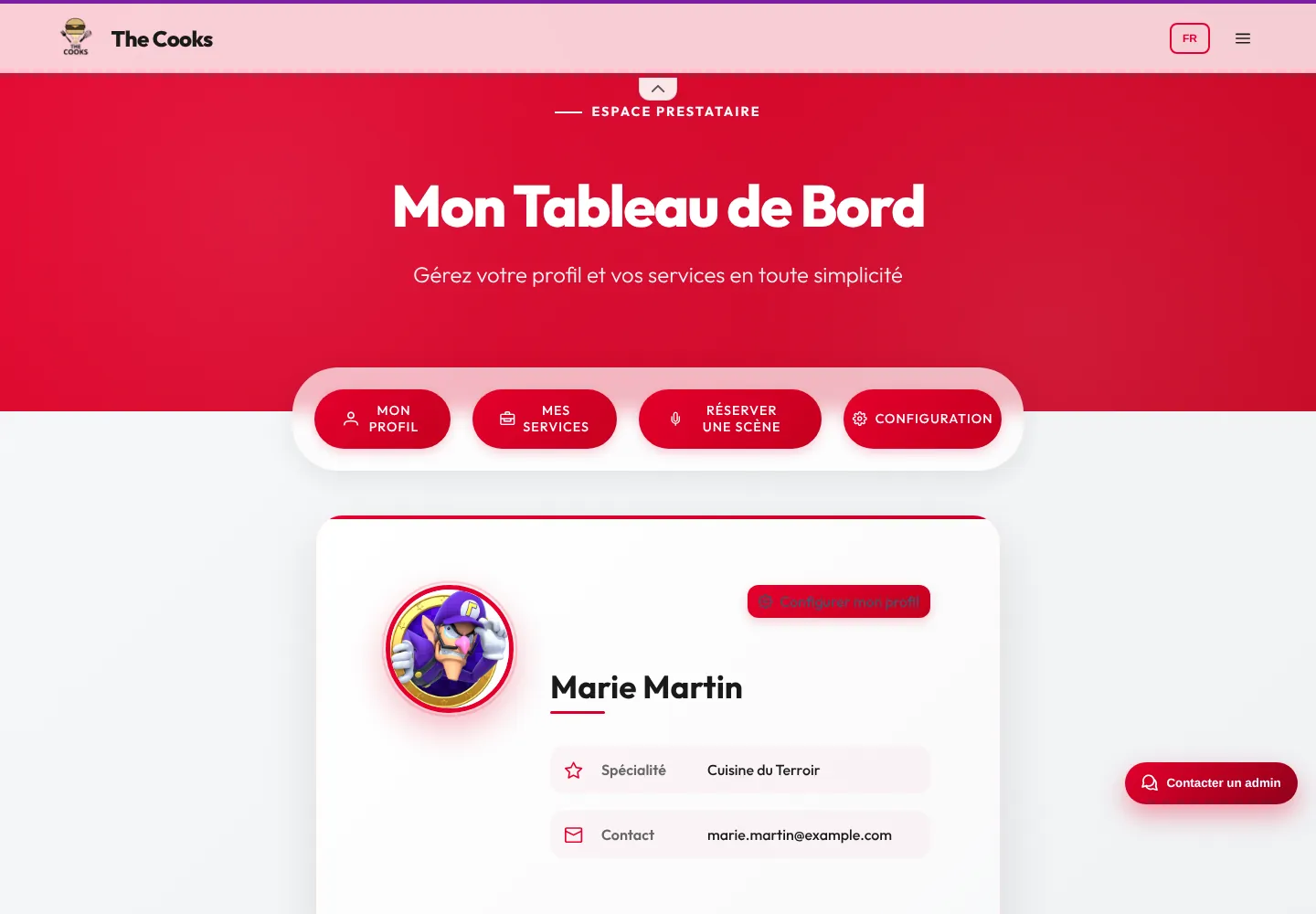
For our second-year SAE (a university team project), our team of five had to design the complete web platform of a festival: The Cooks, a fictional food festival in Dijon. The site had to inform the public, sell tickets, guide visitors and give providers (chefs, technicians) a space to manage their stand.
Three audiences, one site: festival-goers, providers and organizers, each with their own pages and permissions.
What I built, step by step
- A stock management prototypeOctober 2025: a first demo page to track a stand's stock, later reused in the providers' settings (the ingredients “Storage” section).
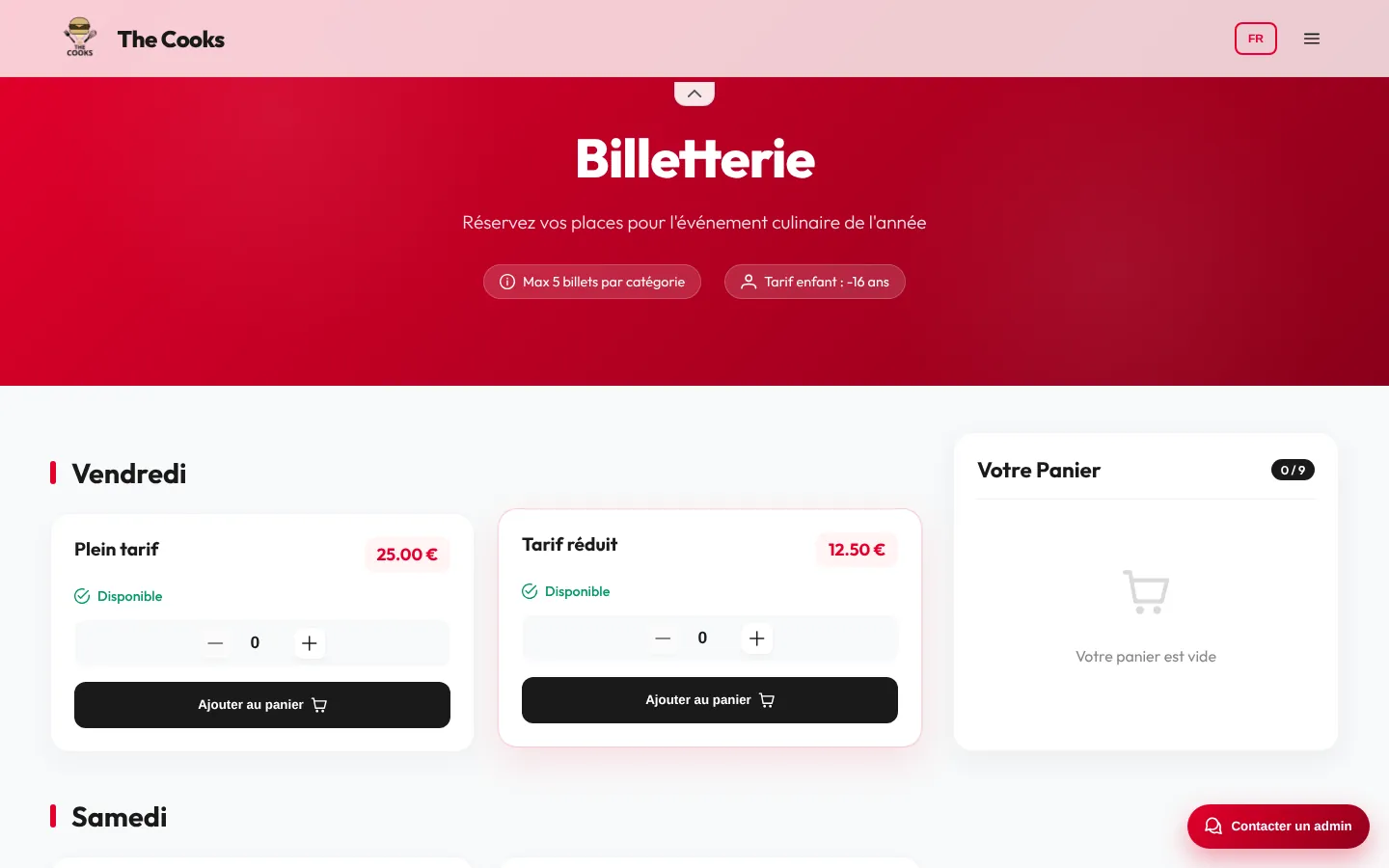
- Ticketing and QR code ticketsA cart by day and price tier, ticket generation with a QR code, email delivery, and a check-in page that scans the QR code with the camera at the entrance and rejects tickets that were already used.
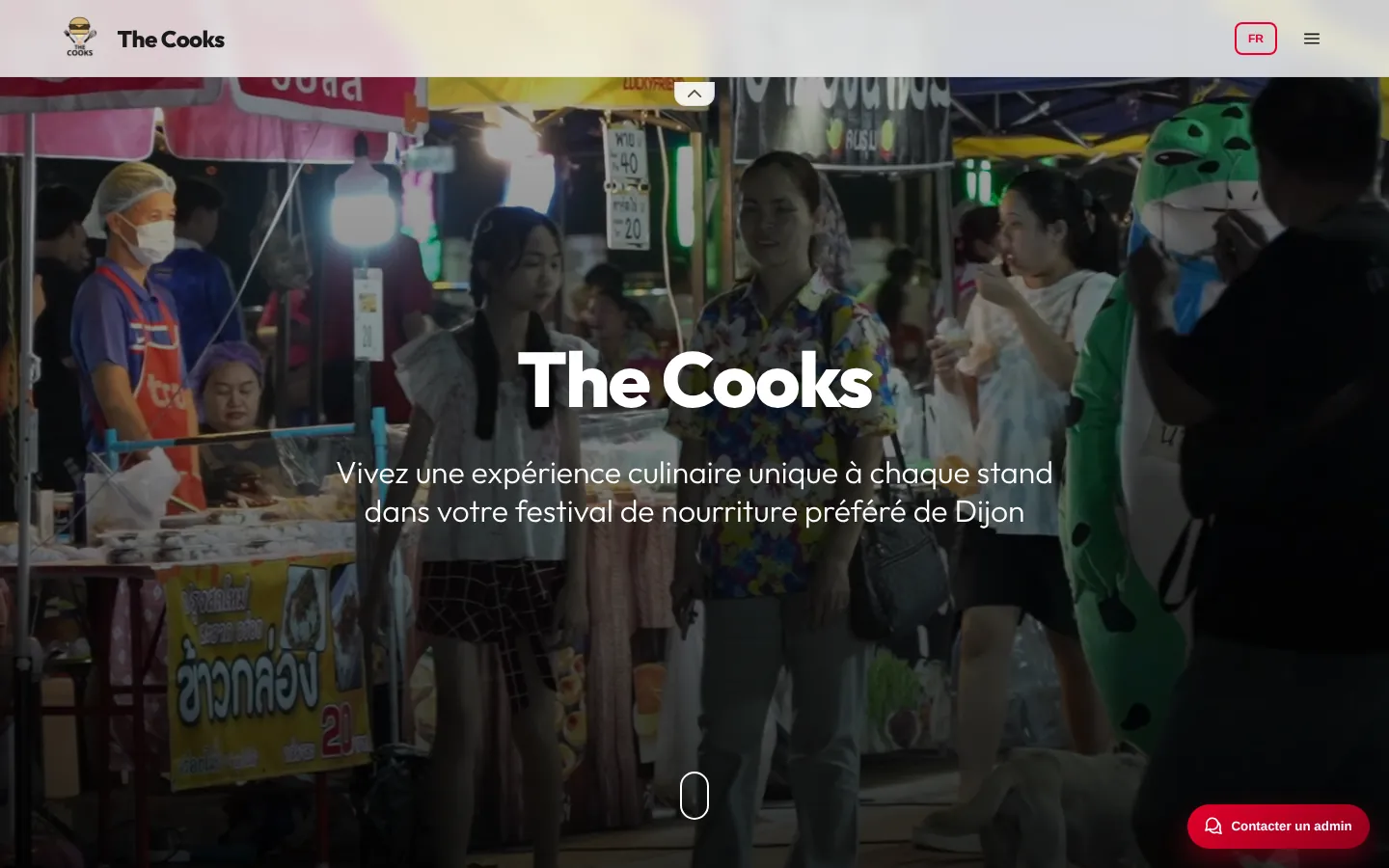
- The home pageThe site's overall layout and the home page with its background video and “About” section.
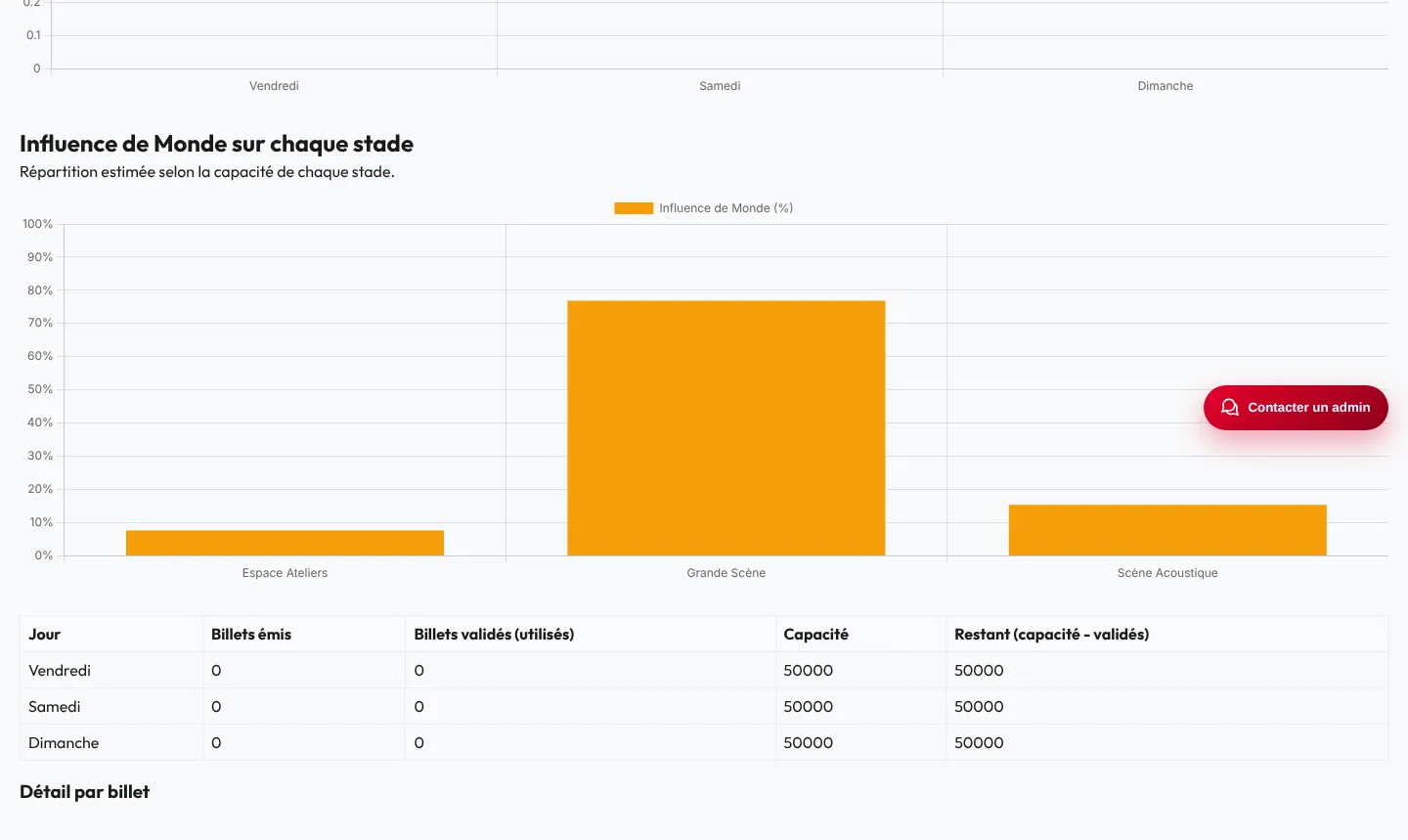
- StatisticsTwo Chart.js charts for organizers: tickets issued and validated per day, and the estimated attendance of each stage.
- The providers' shopEach provider manages their products on their page, and festival-goers add them to a cart.
- Cashless payment, from server to screenAn Express API (balance, top-up, payment, withdrawal, ticket purchase) with the transaction history stored in the database, and the festival-goer dashboard. I also added account deletion.
- DeploymentThe API deployed on Railway and the front end on Vercel, then on GitHub Pages with a GitHub Actions workflow; CORS and the API address configured through environment variables.
- Support and stagesA support messaging system between users and administrators, stage booking with limits enforced by the API, then the final integration fixes across 23 files to ship a stable version.
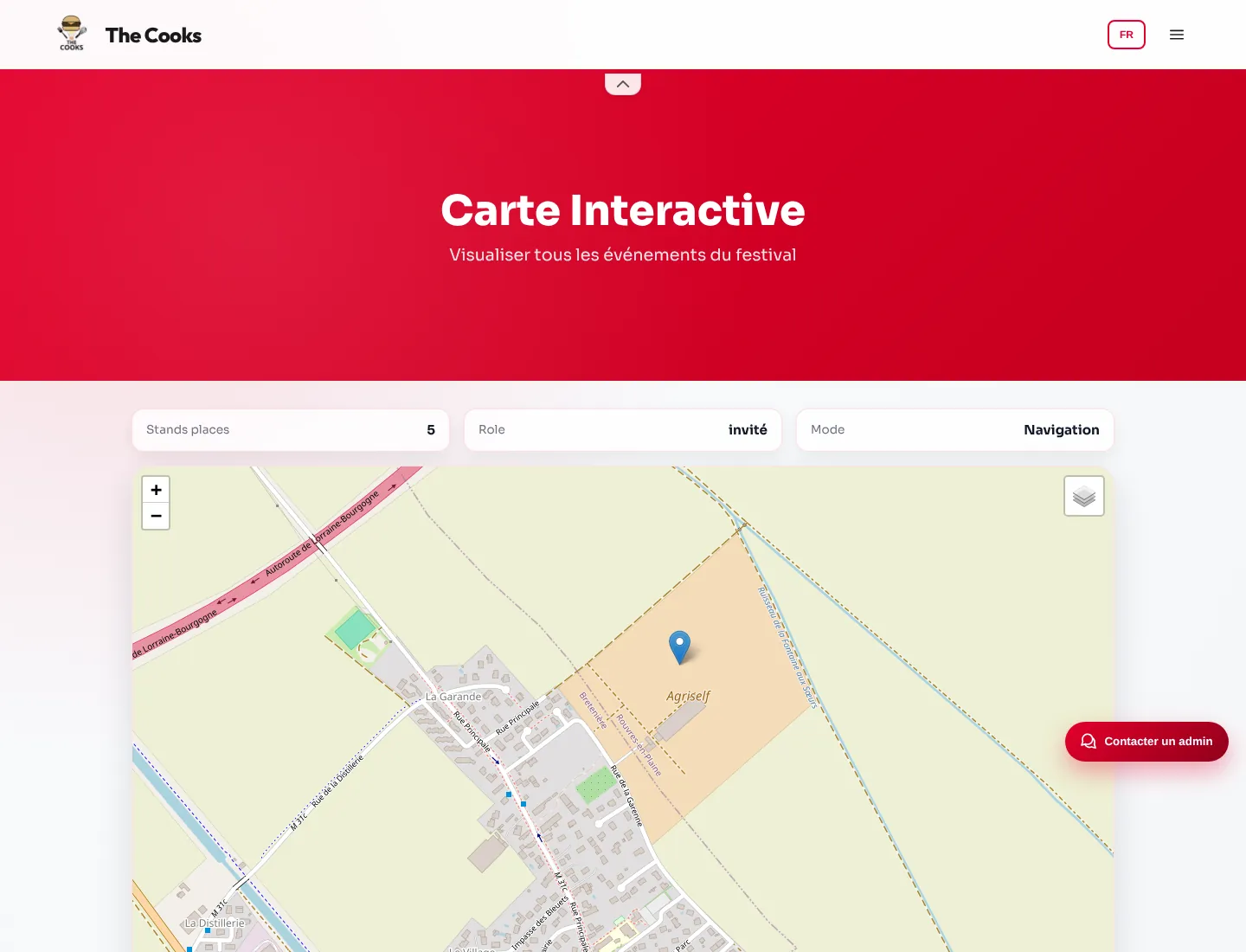
The rest of the team handled, among other things, the interactive Leaflet map and account and role management (including Google sign-in). The whole site is bilingual (French and English) and tested with Vitest.
Chef's tipsTechnical challenges and solutions
-
A payment is never half-done
The problem
A cashless payment changes several things at once: the festival-goer's balance, the provider's balance, the ingredient stock and the history. If a step fails halfway, money can vanish or be counted twice.My solution
The whole payment runs inside a database transaction: both accounts are locked during the operation, the balance is checked, and at the slightest error every change is rolled back.server/routes/cashless.js (simplified excerpt) await sequelize.transaction(async (transaction) => { // Lock both accounts for the duration of the payment const client = await User.findByPk(clientId, { transaction, lock: transaction.LOCK.UPDATE }); const provider = await User.findByPk(providerId, { transaction, lock: transaction.LOCK.UPDATE }); if (Number(client.balance) < amountToDebit) { throw new Error('Solde insuffisant'); } await client.update({ balance: Number(client.balance) - amountToDebit }, { transaction }); await provider.update({ balance: Number(provider.balance) + amountToDebit }, { transaction }); await Transaction.create({ /* … */ }, { transaction }); }); // a single error, and everything is rolled back -
A ticket works only once
The problem
At the entrance, staff must quickly check that a ticket is genuine and hasn't already been used.My solution
Each ticket gets a unique identifier encoded in its QR code. The check-in page reads the QR code with the camera, shows whether the ticket is valid or already used, and marks it as used once validated. -
Getting the API off our laptops
The problem
At first, the server only ran locally, so there was no way to show the site online.My solution
Host the API on Railway and the front end on Vercel, making the API address and the allowed origins (CORS) configurable through environment variables.
The result
A complete application, front end and back end, with real data in the database. The video shows the full journey, first from the festival-goer's side, then from the organizer's.
The demo server hosted on Railway is no longer online: the video and screenshots were made by running the project locally with its demo data (email sending is simulated).
What I learned
Over two semesters, I learned to move forward in a growing five-person project: splitting up features, integrating other people's work and resolving conflicts all the way to delivery. Cashless payment introduced me to database transactions, essential whenever money is involved, and deployment taught me to configure an application so it runs somewhere other than my own machine.
If I did it again, I would set up automated tests and deployment from day one, to avoid last-minute fixes.